
How to Keep Your Baltic Sea Holiday Home Safe
Baltic Sea holiday home: find out which key checkpoints you should never overlook as an owner.
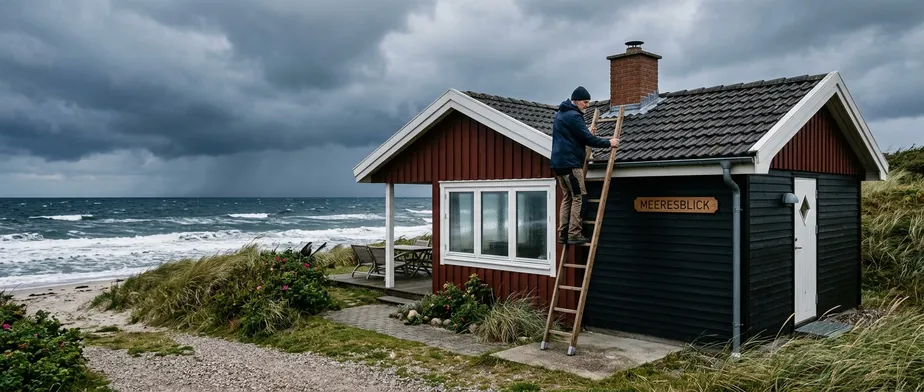
A holiday home on the Baltic Sea means the sound of waves, long summer evenings and a place to escape everyday life. But anyone who owns a property near the coast knows that a lot happens between stays. Moisture seeps into the walls, storms sweep in from the sea and the house often stands empty for weeks or even months. That is why it pays to run through a few checkpoints on a regular basis. It helps preserve the value of the property and prevents you from being left without protection when damage occurs.
Vacancy is the biggest hidden risk
Many owners underestimate that the real problems often arise when the house is not in use. A burst pipe in January may go unnoticed if no one sets foot in the property until April. Burglars have an easy time when no lights are on for weeks and there is no car in the driveway. A loose roof tile shifted by an autumn storm only turns into serious damage when rain penetrates the same spot for months.
Owners should therefore define clear routines for the periods in between. This can be an agreement with neighbours, a local caretaker service or at least a fixed schedule for personal inspections. Regular checks of the heating, water pipes and roof are especially important in winter when frost and moisture come together.
Moisture and coastal climate: What really strains the building fabric
The Baltic Sea coast offers great scenery but also a climate that puts buildings under constant stress. Salty air attacks metal components, high humidity encourages mould and strong gusts of wind wear down façades, window frames and roof structures. These are not dramatic one-off events but gradual processes that build up over many months.
For owners this means that timber façades, gutters, window seals and outdoor areas deserve special attention. A thorough visual inspection once a year and prompt repairs of small defects help prevent expensive consequential damage. Ventilation is also crucial. A house that stays locked up without any air circulation almost invites damp and mould.
Burglary protection: More than a sturdy lock
Holiday homes are particularly attractive targets for burglars because it is easy to predict when no one is there. In quieter locations away from main towns there is often little social control from neighbours. A few basic measures can already make a big difference: timer switches for lights, lockable window handles, a secured meter cabinet and a letterbox that is emptied regularly.
If you occasionally rent out the property, you should also make sure that key handovers are documented and that access options are checked after each change of guests. This can also be relevant for insurance cover because many policies require certain security measures that are set out in the contract.
Review insurance cover on a regular basis
A holiday home is not a typical primary residence, and that makes insurance more complex. Standard buildings insurance often does not apply, or only partially applies, to holiday homes. This is especially true if the property stands empty for long periods or is rented to changing guests.
Insurance cover should therefore reflect the way the property is actually used. Key questions include: How long can the house remain unoccupied? Is it rented out and if so, how often? Which natural hazards are included? Are there requirements for maintenance or winter protection? A specialised holiday home insurance takes these aspects into account and offers cover tailored to seasonal use, vacant periods and regional risks.
Documentation: Proof is what counts when damage occurs
If damage does occur, whether due to a storm, burst pipe or burglary, documentation often determines how smoothly the claim is settled. Photos of the property’s condition, invoices for maintenance work and an up-to-date inventory of furnishings are especially helpful.
It is sensible to record the condition of the property in photos at least once a year. This includes the roof, façade, heating system, sanitary installations and valuable furnishings. In the event of a claim, this makes it easier to show which condition existed before the damage. Maintenance records and invoices from tradespeople should also be kept in order. They show that you have met your maintenance obligations.
Conclusion: Forward planning protects your holiday home
A holiday home on the Baltic Sea is an investment in quality of life. To protect this investment in the long term you do not need complicated bureaucracy. What helps most are a few reliable routines: regular inspections, insurance cover that matches actual use and organised documentation. If you keep these points in view, you can enjoy your time by the sea with peace of mind and stay well prepared even when the Baltic weather turns rough.
More articles
Culinary Highlights on the Baltic Sea: Fish and Markets
The Baltic Sea delights visitors with fresh fish, maritime cuisine, regional specialties, harbor towns, markets and authentic restaurants.
Secret Swimming Coves and Undiscovered Beaches on the Baltic Sea
The Baltic Sea enchants with hidden swimming coves, quiet natural beaches and relaxed holidays far from the well-known coastal resorts.
Experience Traditions and Festivals on the Baltic Sea in Style
The Baltic Sea captivates with harbor festivals, maritime traditions and cultural events full of local flair all along the coast.

Maritime culture and calm: Discover Baltic Sea towns in autumn
In autumn, Baltic Sea towns reveal their quiet side. Discover maritime culture, historic old towns, relaxed harbours and restful days in a holiday home.

Things That Make You Happy at the Baltic Sea
What makes the Baltic Sea so uplifting? An atmospheric love letter to small moments of happiness between beach, waves, salty air and open horizons.

Holidays with children on the Baltic Sea: enjoy a relaxed family break
A family holiday on the Baltic Sea combines relaxation, beach time and excursions and shows how vacations with children in a holiday home can be pleasantly relaxed.
