
Planning Business Trips: Travel Agency or Self-Booking?
Secure efficient business trips: Compare the advantages of using a business travel agency versus self-booking to save time and gain planning reliability and flexibility.
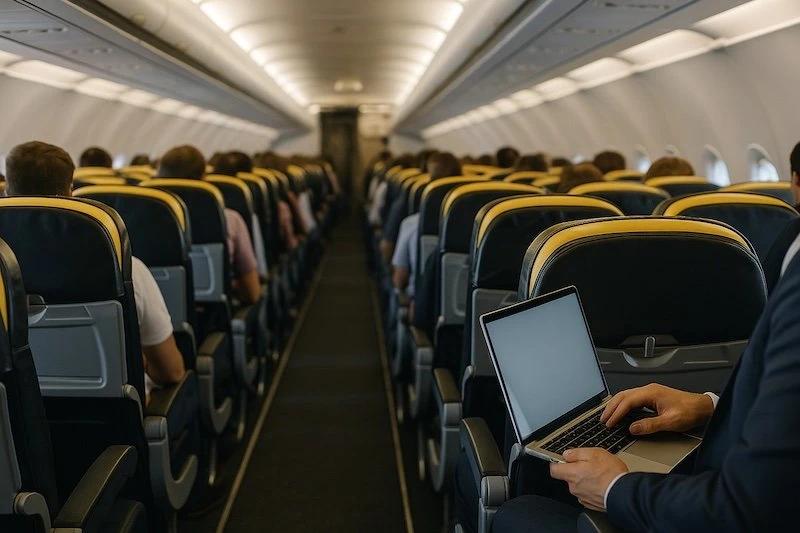
On business trips, success often depends less on the appointment itself and more on the structure behind it. Whether it is the journey, accommodation or timing, every element has to work together so there are no unnecessary interruptions along the way. The question of whether a company handles these tasks itself or entrusts them to a specialist partner carries more weight than it may seem at first glance.
The advantages of professional organization often lie in the details. Anyone who plans several business trips a year quickly realizes how much time is needed for coordination and corrections. Flight times must be chosen so that there is enough buffer for transfers or possible delays. External factors such as construction work, strikes or major events at the destination can also affect planning. If these are taken into account in advance, last-minute changes can be implemented far more smoothly.
Another key factor is aligning plans with the working habits of the travelers. Some can head straight into a meeting after a long flight, while others need a short break to stay focused. If these individual differences are built into the schedule, this not only increases efficiency but also reduces the strain on the road.
Efficiency that goes beyond costs
The question of the best way to organize travel is often reduced to a simple price comparison. Yet in the long run, efficiency means far more than finding the cheapest individual booking. In internationally active companies in particular, the real strength lies in the ability to respond flexibly to unexpected events. Schedule changes, flight cancellations or new entry regulations cannot always be avoided, but they can be managed so that projects and business relationships do not suffer.
A well-rehearsed internal team or an experienced external partner can make a crucial difference here. It is not just about quickly rebooking a flight, but also about finding alternative routes, optimizing arrival times or fitting new appointments into the schedule in a sensible way. Anyone who travels abroad regularly also knows how strongly cultural differences or language barriers can influence communication. When these aspects are already considered during planning, the risk of starting meetings unprepared or losing valuable time on organizational questions is reduced.
Over time, a reliable structure pays off twice: budgets become easier to plan, downtime is reduced and employees can focus their energy more strongly on their actual objectives.
Stability through experience and tailored processes
Companies that take a long-term view of travel organization are increasingly relying on structures based on experience and individual adjustment. Instead of starting from scratch with every booking, they use proven workflows and adapt them when needed. This creates a system that can respond to changing conditions without losing efficiency.
The choice between internal organization and external support often depends on the size and focus of the company. Smaller firms with few travel days per year can often manage planning in-house, while larger companies frequently benefit from the experience of specialized providers. A partner like tiggesreisebuero brings not only market knowledge and a strong network, but also an eye for optimizations that go beyond the individual booking process.
Another advantage lies in the evaluation of past trips. Companies that document which connections have proven reliable, which accommodations offer short distances or which transfer times are dependable can plan future trips with greater precision. This not only reduces potential sources of error, it also creates more stability in day-to-day operations, regardless of how often and where employees travel.
Over time, this develops into a reliable foundation that allows even short-notice adjustments to be implemented with minimal friction. For companies, this means not only smoother trips, but also a sustainable investment in productivity and reliability, qualities that are often more decisive in global business than the price of a single ticket.
More articles

How to Keep Your Baltic Sea Holiday Home Safe
Baltic Sea holiday home: find out which key checkpoints you should never overlook as an owner.
Culinary Highlights on the Baltic Sea: Fish and Markets
The Baltic Sea delights visitors with fresh fish, maritime cuisine, regional specialties, harbor towns, markets and authentic restaurants.

Secret Swimming Coves and Undiscovered Beaches on the Baltic Sea
The Baltic Sea enchants with hidden swimming coves, quiet natural beaches and relaxed holidays far from the well-known coastal resorts.
Experience Traditions and Festivals on the Baltic Sea in Style
The Baltic Sea captivates with harbor festivals, maritime traditions and cultural events full of local flair all along the coast.

8 good reasons to visit Usedom in spring
A spring holiday on Usedom offers peace, fresh Baltic Sea air and nature, and reveals in eight reasons why the island is especially rewarding at this time of year.

Maritime culture and calm: Discover Baltic Sea towns in autumn
In autumn, Baltic Sea towns reveal their quiet side. Discover maritime culture, historic old towns, relaxed harbours and restful days in a holiday home.
